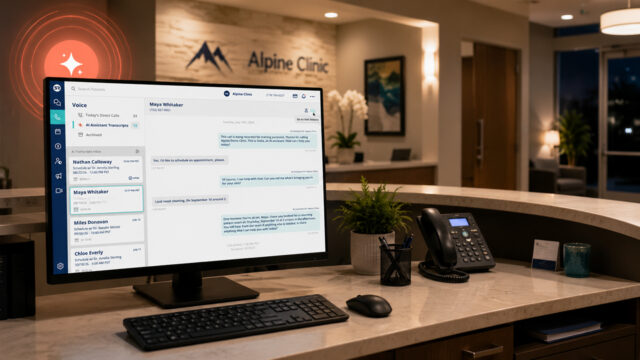
When Do Point Payment Tools Start Creating Friction?
Most growing practices didn’t intentionally create a fragmented payment environment.
Payment tools are often added gradually to solve immediate needs:
- An online bill-pay portal
- A text-to-pay vendor
- A financing provider
- A separate merchant service
Each tool solves a specific problem.
Individually, they often work well. Over time, though, they can introduce complexity that isn’t obvious at first.
Staff may end up:
- Managing multiple payment systems
- Reconciling deposits across vendors
- Answering patient questions about different payment options
At the same time, collection pressure continues to increase. Patient collection rates dropped from 54.8% in 2021 to 47.8% in 2022–2023 for insured balances.
Practices are collecting less—even as patient financial responsibility grows.
That’s why many organizations start asking a different question:
Would a unified healthcare payment system scale better than another point tool?
What’s the Difference Between a Healthcare Payment System and Point Tools?
The difference comes down to how payments fit into everyday workflows.
Point tools
Point tools solve one task at a time:
- Text-to-pay vendors send SMS payment links
- Online portals allow digital balance payments
- Financing vendors offer installment plans
Each tool works—but often independently.
Healthcare payment solutions
Modern healthcare payment systems take a broader approach. They integrate payments into systems practices already use for:
- Scheduling
- Patient communication
- Engagement workflows
For growing organizations, alignment matters more than adding more tools.
The goal isn’t simply offering more payment options.
It’s making sure they operate within a single healthcare payment system that supports staff workflows and the patient experience.
How Solutionreach helps:
Solutionreach integrates with practice management and EHR systems to unify patient communication and payment workflows.
How Do Point Payment Tools Affect Growing Practices Over Time?
Point tools often work well early on.
A single-location practice with modest volume can manage one or two payment channels without much difficulty.
But as practices grow, the seams between systems start to show.
Teams may need to:
- Log into multiple dashboards to confirm payments
- Reconcile deposits across vendors
- Combine reports from several systems to see financial performance
Individually, these tasks seem manageable.
Together, they increase administrative strain.
The broader environment adds pressure. Roughly 100 million Americans carry medical debt, which means payment conversations are becoming more frequent and more complex.
When payment tools operate independently, those conversations become harder for both staff and patients.
A patient may receive:
- One balance notice from a billing portal
- A reminder from a communication platform
- A third message from a financing provider
From the patient’s perspective, it doesn’t feel coordinated.
It feels fragmented.
For growing practices, the challenge isn’t only collections. It’s managing the operational complexity around payments.
How Solutionreach Helps
Solutionreach provides a healthcare payment system that connects payment reminders, patient communication, and digital payment options.
How Does a Unified Healthcare Payment System Support Growth?
A unified healthcare payment system treats payments as part of the broader workflow of the practice.
Instead of operating separately, payment functionality connects directly with practice management or EHR systems.
That means:
- Balance updates sync automatically
- Staff see payments in real time
- Payment requests update when patient balances change
Automation also plays a role.
Payment workflows can trigger automatically based on:
- Appointments
- Outstanding balances
- Patient activity
This reduces manual follow-up and keeps communication consistent.
Centralized reporting
Unified systems also improve visibility.
Instead of combining reports from multiple dashboards, administrators can track payment activity across:
- Providers
- Locations
- Payment channels
The result is simpler operations and clearer financial visibility.
How Do Healthcare Payment Solutions Affect the Patient Experience?
Operational complexity rarely stays behind the scenes. Patients often experience it directly.
When payment systems operate independently, patients may receive:
- Conflicting balance notifications
- Duplicate reminders
- Different payment instructions
These inconsistencies create confusion and weaken trust.
From the patient’s perspective, communication should feel like one conversation with the practice.
As patients take on a larger share of healthcare costs, clarity becomes even more important.
Patients want to know:
- What they owe
- When payment is due
- How to pay easily
Unified patient payment solutions help create that clarity by aligning payment communication with appointment reminders and patient messaging.
For multi-location practices, this consistency becomes even more important. Patients expect the same experience at every location.
How Solutionreach Helps
Solutionreach connects payment notifications with patient communication tools so practices can send balance updates, payment reminders, and secure payment links.
Explore a Patient Engagement Platform ->
When Should a Practice Move Beyond Point Payment Tools?
Most practices don’t switch systems just to adopt new technology.
They switch when existing tools begin creating operational friction.
A few questions can help identify when it may be time to evaluate a unified healthcare payment system:
- Are staff reconciling payments from multiple systems?
- Is reporting becoming harder as the organization grows?
- Are patients receiving inconsistent payment messages?
- Does growth require adding yet another vendor?
If several of these sound familiar, the issue may not be staff processes.
It may be the structure of the payment environment itself.
What works for one location may not support a growing organization.
At that point, many practices begin evaluating healthcare payment solutions designed for scale rather than layering additional point tools.
How Solutionreach Helps
Solutionreach helps practices consolidate patient communication and payment workflows into one platform built to scale.
Explore Revenue Cycle Workflows ->
Frequently Asked Questions About Healthcare Payment Solutions
How do healthcare payment solutions help multi-location practices?
They centralize payment activity and reporting across locations so administrators can track collections and patient balances in one place.
Do healthcare payment systems replace practice management software?
No. Most healthcare payment solutions integrate with existing practice management or EHR systems and sync payments in real time.
How do patient payment solutions improve consistency?
They standardize balance communication, reminder timing, and payment options across locations.
What payment options should growing practices offer?
Many organizations now offer:
- Text-to-pay
- Secure online payments
- Card-on-file options
- Financing programs
Healthcare payment solutions bring these options together in one workflow.
How do healthcare payment systems reduce staff workload?
Automation handles routine tasks like payment reminders, balance notifications, and follow-ups.
Key Takeaways
Point tools can solve immediate payment needs, and many practices rely on them for years.
But as organizations grow, the gaps between those tools become harder to manage.
Staff must:
- Reconcile multiple systems
- Combine reports from different vendors
- Manage inconsistent patient payment communication
A modern healthcare payment system helps prevent that complexity.
Scalable healthcare payment solutions connect payments, communication, and reporting into one workflow—simplifying operations and improving financial visibility.
The right healthcare payment system doesn’t just process payments.
It gives growing practices the structure they need to scale with confidence.
Ready for a Simpler Healthcare Payment System?
If your healthcare payment solutions are starting to feel layered, it may be time to simplify.
See how Solutionreach helps practices unify patient payment solutions and reduce operational complexity.
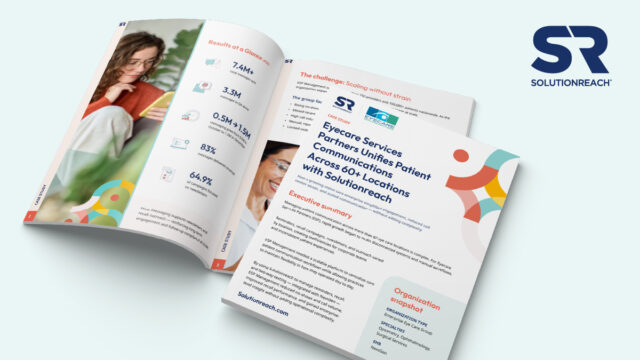
How do 60+ locations standardize patient communication without overwhelming staff?
👉 Download the ESP case study to see how unified workflows reduced no-shows, lowered call volume, and scaled engagement across 200+ providers.