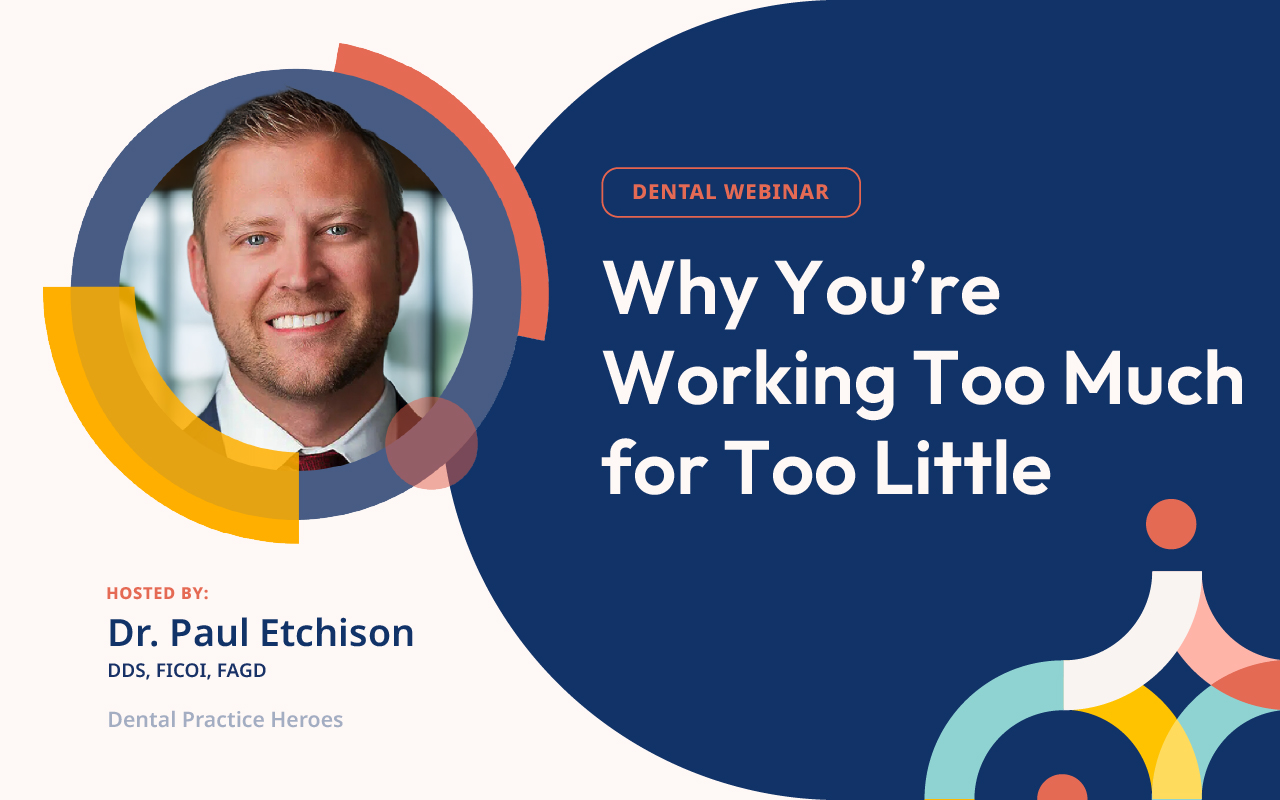
Insights from Dr. Paul Etchison’s dental practice management webinar hosted February 4.
Dental practice ownership was supposed to mean more freedom, more income, and more control of your time. Instead, many dentists find themselves overworked, overwhelmed, and stuck being the chief everything officer.
In this practical, high impact webinar on dental practice management, Dr. Paul Etchison of Dental Practice Heroes breaks down why so many dentists feel stretched thin — and how clearer systems, stronger leadership structure, and intentional scheduling can fundamentally change how a practice runs.
If you want a more profitable, less chaotic practice that doesn’t depend on you being everywhere at once, this session lays out a path forward.
Webinar Overview
- Host: Dr. Paul Etchison, Dentist and Founder of Dental Practice Heroes
- Date: February 4
- Format: Live webinar, now available for on demand viewing
This session focused on real-world management strategies that help dentists increase production, reduce burnout, and build practices that operate smoothly without constant owner intervention.
The Core Problem: Most Practices Run on Effort, Not Systems
Dr. Etchison opened with a truth many owners quietly recognize:
Chaos in your practice isn’t usually a people problem. It’s a systems problem.
Most growing offices lack defined dental practice systems — documented processes, clear accountability, and consistent communication. Without structure, everything flows back to the dentist.
This leads to:
- Constant interruptions
- Decision fatigue
- Team resentment and confusion
- Owner burnout
Without defined systems, the dentist becomes the bottleneck for everything.
Step 1: Operational Systems That Set You Free
Systems are simply the agreed-upon way things are done in your dental practice. When systems live only in your head, you carry the cognitive load for the entire practice.
As Dr. Etchison puts it: checklists beat memory every time.
Foundational Dental Practice Systems to Document
Strong dental practice systems include:
- 30-60-90 day onboarding plans for every role
- Clear opening and closing procedures
- Defined ownership for daily responsibilities
- Standard workflows for scheduling, intake, and follow-up
When responsibilities are clearly assigned, resentment drops and accountability increases.
This is also where the right technology can quietly support your systems. For example:
- Automated appointment reminders and confirmations help reinforce your scheduling protocols (see how automated patient reminders support consistency).
- Structured two-way texting reduces front desk interruptions while improving responsiveness (learn more about secure patient messaging).
- Online scheduling tools protect high-value appointment blocks while giving patients convenient access (explore online appointment scheduling for dental practices).
The goal isn’t adding more tools. It’s reducing manual strain while reinforcing clear workflows.
The Seven Core System Categories in a Dental Practice
Dr. Etchison organizes practices into seven areas where defined systems drive measurable results:
- Marketing and referrals
- Phone answering and appointment booking
- Patient experience
- Financial presentation and treatment acceptance
- Scheduling protocols
- Clinical efficiency and delivery
- Collections and revenue flow
Improving even one area can meaningfully increase production and reduce stress.
If scheduling inefficiencies are limiting growth, this related breakdown on dental scheduling optimization strategies explores how small structural shifts can drive significant production gains.
Step 2: Leadership Systems That Lift the Weight
Most practices are structured with the dentist at the center of every decision.
That works — until it doesn’t.
The Leadership Model That Scales
Instead of managing everyone directly, Dr. Etchison recommends building a small leadership team.
Common leads include:
- Office manager lead
- Clinical assistant lead
- Hygiene lead
Team members bring issues to their lead, not the dentist.
Leads manage:
- Staffing and coverage
- Team conflict
- Department metrics and accountability
- Training and onboarding
- Hiring decisions
The result: fewer interruptions and clearer accountability.
Leadership isn’t about tenure. The strongest leads are respected, consistent, and strong communicators. Some practices even allow team voting to build buy-in.
Step 3: Work on the Practice — Not Just in It
Dentists are trained to produce clinically. They’re rarely trained to design businesses.
But long-term sustainability requires protected strategic time.
Smarter Scheduling, Not More Days
Working more days doesn’t automatically increase income.
Dr. Etchison demonstrates how intentional dental scheduling optimization can:
- Protect high-value procedures
- Preserve new patient access
- Reduce low-margin, high-fatigue days
- Improve production per hour
Calmer days often outperform busier ones.
If patient no-shows are disrupting production blocks, this guide on reducing dental no-shows with automated confirmations outlines proven ways to stabilize the schedule.
Dropping a Clinical Day Without Losing Income
Tactical shifts that often free up a full day per week include:
- Staggering assistant lunches
- Delegating crown prep tasks appropriately
- Utilizing hygienists for anesthetic (where allowed)
- Strengthening co-diagnosis workflows
Combined with structured scheduling, practices frequently increase production without adding providers or patients.
Practice Management Isn’t a Mystery
The biggest takeaway from this webinar is simple. You don’t need to reinvent dentistry. Proven systems already exist.
When practices implement:
- Clear leadership accountability
- Patient-centered workflows
Everyone benefits:
- Dentists work fewer days
- Teams feel supported
- Patients experience greater consistency
- Revenue becomes more predictable
Where Technology Supports Modern Dental Practice Management
Even the best internal systems fail if patients don’t stay engaged.
Reliable dental patient communication software like Solutionreach reinforces everything Dr. Etchison teaches.
Automated tools can help practices:
- Improve confirmation rates
If you want smoother days, the right patient communication tools can help, automating reminders and follow-ups while keeping messages personal to your practice.
The goal isn’t more messages. It’s more consistency without adding complexity.
Ready to See What This Looks Like in Practice?
If your goal is to:
- Increase production
- Improve patient experience
- Reduce daily operational strain
The next step is simple.
Request a Solutionreach demo to see how automated reminders, confirmations, secure messaging, and online scheduling reinforce the kinds of systems Dr. Etchison outlines.
A strong practice isn’t built on hustle alone.
It’s built on clear systems supported by technology that makes them easier to run.

Not sure what’s holding your practice back?
👉 Grab 10 Must-Have Metrics to Grow Your Practice and start measuring what really moves the needle.