A new year brings fresh energy, and it’s a good time to finally take on one of the biggest headaches in healthcare: patient no-shows. They drain revenue, disrupt schedules, and add stress for teams in dental practices, eye-care clinics, specialty offices, and multi-location healthcare groups. If you’re looking for practical ways to reduce patient no-shows, this is the right place to start.
The U.S. healthcare system loses $150 billion every year to no-shows. Optometry office missed appointment rates average 25%. Dental practices sit near 15%, with some hitting 30%.
If you want fewer empty chairs in 2026, here’s a straightforward five-step plan that keeps your schedule full and your team sane.
Step 1: How Do We Accurately Benchmark Our No-Show Rate?
Before you can fix no-shows, you need to understand where they’re coming from. Look for patterns. Maybe mornings are tough. Maybe certain appointment types fall apart more easily. Maybe one location struggles more than others.
Q: What numbers should we track first?
Start with the basics:
- No-show rate
- Late-cancel rate
- Recovery rate
- Revenue loss
Pull reports from your practice management or patient communication software. Once you have a solid baseline, you can set realistic goals like lowering no-shows by 20% by April.
Solutionreach gives practices real-time dashboards that track no-show performance across single offices or multi-location groups. It’s easy to spot trends, compare providers, and monitor improvements month over month.
Learn more about Analytics and Reporting →
Step 2: How Do We Build a 90-Day No-Show Reduction Plan?
A 90-day plan keeps everything structured and manageable, whether you’re a solo practice or part of a larger medical group.
Month 1: Awareness + Clean-Up
Identify patterns. Update outdated phone numbers and emails. Train the team to use consistent confirmation language.
Month 2: Add Automation
Turn on automated reminders. Enable two-way texting. Experiment with reminder timing and message tone. Small adjustments often lead to big improvements.
Month 3: Engage + Evaluate
Add incentives. Review your results. Adjust your plan. Celebrate what worked. Reinforce consistency.
Q: Why does a 90-day plan work so well?
Because it’s quick, focused, and easy for busy teams to follow. You build momentum fast, and momentum helps everyone stay consistent.
Solutionreach supports 90-day plans with automated smart reminders, two-way texting, and customizable messaging. Practices can see what’s working and adjust in real time.
Learn more about Appointment Reminders →
Step 3: What’s the Best Way to Automate Patient Engagement?
Automation is one of the fastest ways to reduce no-shows, especially when staff are overwhelmed with calls and schedule changes.
Q: What makes a reminder tool effective?
Look for:
- Text, email, and voice reminders
- Two-way texting
- Smart rescheduling links
- Real-time practice management system (PMS) syncing
- Flexible timing options
Q: Why does automation work so well for dental, eye care, and medical practices?
Because patients forget. Automation doesn’t. Reminders go out at the right time so patients can confirm or reschedule with minimal effort.
Practices using automated reminders have cut no-shows by up to 38%.
Solutionreach automates reminders across text, email, and voice. Real-time, two-way texting makes confirmations simple, and smart links help fill canceled slots quickly.
Learn more about Two-Way Texting →
Step 4: Should We Use Incentives to Keep Patients on Track?
Yes, incentives help. And they don’t have to be complicated or expensive.
Q: What incentives work best?
Try:
- Loyalty points
- Monthly giveaways
- Eyewear cleaner
- Dental kits
- Discounted products or services
Simple rewards make patients feel appreciated and create positive habits.
Q: Do incentives actually reduce no-shows?
Yes. Practices report better attendance and stronger long-term retention when they use even small rewards.
73% of medical practices saw improved or steady no-show rates with tracking and incentives.
Solutionreach lets you promote incentives within automated reminders and messages, so patients see them right when they’re deciding whether to show up.
Learn more about Patient Messaging →
Step 5: How Do We Keep No-Show Rates Low All Year Long?
Monthly monitoring gives you control instead of letting no-shows take over your schedule.
Q: What should we track every month?
- No-show trends
- Confirmation rates
- Successful reschedules
- Admin staff time saved
Q: Why does monthly tracking matter for both small and multi-location practices?
Because it helps you catch issues early and keeps every location aligned.
Dental practices with strong systems saw no-shows drop from 7% to 4% in one year.
Solutionreach dashboards make it easy to monitor performance in real time. Compare locations, watch trends, make adjustments early, and keep schedules full.
Learn more about Practice Management →
FAQs: Your Top Questions About Reducing No-Shows
Q: What is the most effective way to reduce patient no-shows?
The most reliable approach is combining consistent communication with automated reminders. When patients receive timely texts or emails—and can easily confirm or reschedule—you reduce friction and dramatically cut no-shows. Clean patient data, clear policies, and monthly monitoring also strengthen long-term results.
Q: How do automated reminders help reduce no-shows in healthcare?
Automation removes the burden from your staff and ensures every patient gets the right message at the right time. Smart reminders make it easy for patients to confirm, ask questions, or request a new appointment long before a time slot is wasted. Practices that use automated messaging typically see a significant drop in missed appointments.
Q: What is considered a good no-show rate for dental or eye-care practices?
Most practices aim for a no-show rate between 5–10%, depending on specialty, patient demographics, and scheduling volume. If you’re above 15%, it’s a strong signal that automation, updated contact information, or better patient engagement strategies could help reduce appointment no-shows quickly.
How Can We Make 2026 Our Best Year for Scheduling and Attendance?
Imagine fewer gaps, more predictability, and a happier team across every location. It’s entirely possible and easier than you might think.
Solutionreach brings everything together with automated reminders, two-way texting, analytics, and patient communication tools designed for dental, eye care, medical, and multi-location organizations.
✅ Schedule a Demo →
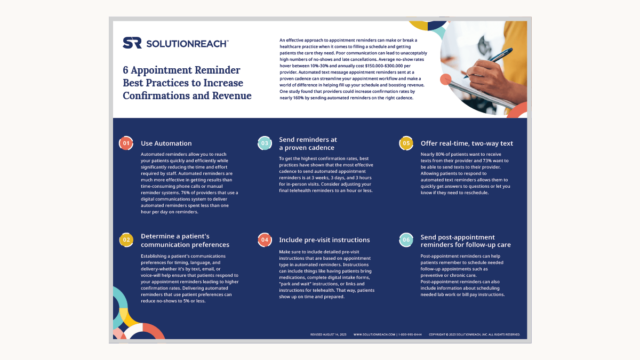
Tired of no-shows throwing off your whole day?
👉 Grab the 6 Appointment Reminder Best Practices guide and learn simple ways to boost confirmations, fill more appointments, and grow revenue fast.
I Want to Read the Guide