93% of Americans still trust their individual doctor as of 2023, according to KFF. What they’ve stopped trusting is nearly everything around the doctor — the confusing bill, the phone that goes to voicemail at 7 p.m., the intake form filled out for the third time because none of the systems talk to each other.
Dr. Geeta Nayyar calls this the patient trust gap. In her book, Dead Wrong: Diagnosing and Treating Healthcare’s Misinformation Illness, she argues it’s where patient loyalty’s quietly getting lost. Trust in the exam room stays high, but trust in everything else is drifting away, usually to a social media personality with a big audience and no medical training.
If you run a dental, vision, or medical practice, or a group of them, this is your competition now. Your front desk, your billers, and your care coordinators are the ones absorbing the pressure of trying to keep the experience feeling human, with tools that mostly weren’t built for it.
Here’s what the gap looks like day to day, and what starts to close it.
What patient distrust looks like inside a busy practice
Picture a patient who’s been with her family medicine doctor for six years. She likes the doctor. She trusts the doctor. Send her a survey about clinical care, and she’ll rate you five stars.
Then she opens a bill for $5,000 that nobody at the practice can explain — including the doctor. Dr. Nayyar says her office gets these calls all the time. Patients ring in upset, asking why they got a $5,000 bill, and her honest answer is that she doesn’t know either. Her advice to them, half-joking: “Don’t pay the first one, not the second one. After the third, we’ll entertain it.”
That charge had nothing to do with clinical care. But the patient doesn’t separate the doctor from the practice, because nobody does. To her, it’s all one thing, and it’s harder to trust than it used to be.
“You can’t get my name right. If you can’t run your office efficiently and on time, well then, are you really good at medicine? Are you really good at diagnosis and treatment?”
Dr. Geeta Nayyar
Now flip it around and look at that same Tuesday from behind the front desk. Phones ringing during lunch. Callbacks piling up. A biller stuck on hold with an insurer trying to make sense of a charge nobody on staff can explain either. A care coordinator trying to close the loop on a lab result while three people wait at the check-in window. Nobody meant to send an unexplained bill. The system just didn’t leave room to catch it before it went out.
You’ve been through some version of that Tuesday, probably more than once this month.
How your patients started comparing you to Amazon and their bank
The trust gap didn’t open overnight, and it doesn’t have much to do with clinical care.
A few things stacked up over the last five years. Institutional trust dropped almost everywhere after 2020, and healthcare took a real hit. Hospitals, insurers, and pharmaceutical companies — patient confidence in all of them slid between 2019 and 2022, and it hasn’t fully recovered. Trust in individual doctors held, though. Patients stayed loyal to the person and pulled back from the system.
Meanwhile, everything else in your patients’ lives got easier:
- They tap once to check out on Amazon
- They deposit checks by taking a picture of one
- Their favorite restaurant texts them a reminder the day before their reservation
Then they walk into your dental office and get handed a clipboard to confirm information they already gave over the phone. They notice.
Dr. Nayyar has a running joke about the technology side of this: healthcare’s single-handedly keeping the fax machine industry alive. It’s funny because it’s true. Vendors solve one problem and create three more. EHRs don’t talk to each other. Your team inherits all of it and works around it, patient by patient.
Why patients call “Dr. TikTok” when your office is closed
Think about what your patient does at 7 p.m. when she has a real question about a medication or a strange side effect. She turns to whoever picks up first.
That’s usually a wellness influencer with a big following, no accountability, and no idea about her medical history. Dr. Nayyar has a name for this competitor: Dr. TikTok. And patients don’t turn to Dr. TikTok because they’ve decided an influencer knows more than their doctor — they turn to Dr. TikTok because their doctor’s office is closed and their question can’t wait.
The fallout shows up back in the exam room. The patient who skipped a vaccine after seeing a viral post comes back with the illness the vaccine prevents. The one who bought a $9.99 home genetic kit instead of getting a mammogram comes back with cancer at a later stage. Every hour your practice isn’t reachable is an hour someone else is answering the question.
The real competition here is answering the phone at 7 p.m.
What closes the gap: making your practice reachable when it matters
There’s no single fix. There’s a starting point Dr. Nayyar comes back to across the conversation, and it works for a two-provider practice just as well as a fifty-location group: access is the operational side of trust.
In practice, that looks like:
- Two-way texting for routine questions, so patients don’t get sent to voicemail
- Virtual scheduling that works after your office is closed
- Care coordination with a reasonable response window, even after hours
- Billing that’s right the first time, so nobody needs to call to figure it out
A dental patient gets a Sunday-night answer about post-extraction pain. A vision patient confirms a next-day visit by text without playing phone tag. A medical office reviews a bill once and never hears about it again.
Put those pieces together and you’ve built something Dr. TikTok can’t compete with. Your patient can see you, reach you, and knows there’s someone accountable on the other end.
Watch the full conversation with Dr. Nayyar
The rest of the podcast gets into how practices are actually pulling this off, where AI genuinely helps in a clinical setting, and the story behind Dead Wrong: Diagnosing and Treating Healthcare’s Misinformation Illness — including the patient from Dr. Nayyar’s medical training who anchors the whole book.
When you’re ready to look at the operational side
Closing the access gap’s a problem we spend a lot of time on with practices. If you want to see what solving it looks like day to day, take a look at how we help teams get in front of the 7 p.m. phone call, or set up a conversation with us when the timing’s right.
→ See how we help practices close the access gap
Frequently asked questions
What is the patient trust gap?
The patient trust gap is the difference between how much patients trust their individual doctor (around 93%, still very high) and how much they trust everything around the doctor: billing, intake, scheduling, after-hours communication. Dr. Geeta Nayyar coined the framing in Dead Wrong: Diagnosing and Treating Healthcare’s Misinformation Illness to explain why patients can love their physician and still walk away from the practice.
Why do patients still trust their doctor but not healthcare?
Trust in the doctor is built in the exam room. Trust in the system around the doctor gets eroded by everyday friction: misspelled names, unexplained bills, unanswered voicemails, forms that don’t sync. Patients experience it all as one thing, so the friction reads as evidence about the doctor’s care, not just the back office.
Who is Dr. TikTok?
“Dr. TikTok” is Dr. Nayyar’s shorthand for the social media health personalities patients turn to when their own practice isn’t available. Patients reach out to Dr. TikTok because the office’s closed, not because they’ve decided an influencer knows more than their doctor.
How can dental, vision, and medical practices close the trust gap?
Start with access:
- Two-way texting for patient communication
- Virtual scheduling that works outside business hours
- Care coordination that gets back to people within a reasonable window
- Billing that’s right the first time, so patients aren’t chasing statements
These operational fixes give patients something to reach when your office is closed.
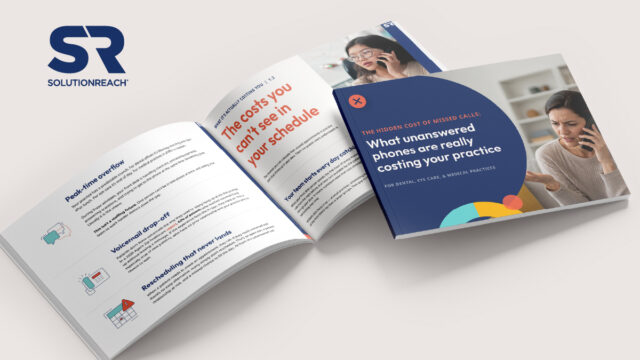
Your missed-call problem may be bigger than you think.
Use the guide to put a number on it.